
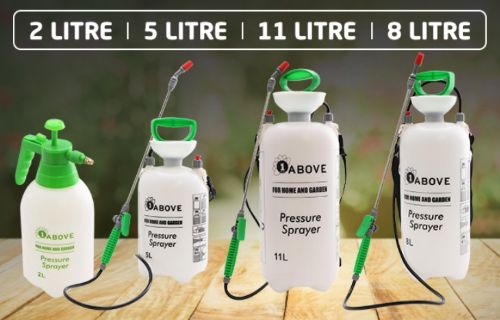




A practical 1ABOVE sprayer buying guide comparing 2L, 5L, 8L, and 11L models, helping you choose the right size based on your garden and needs.
Choosing the Right 1ABOVE Sprayer
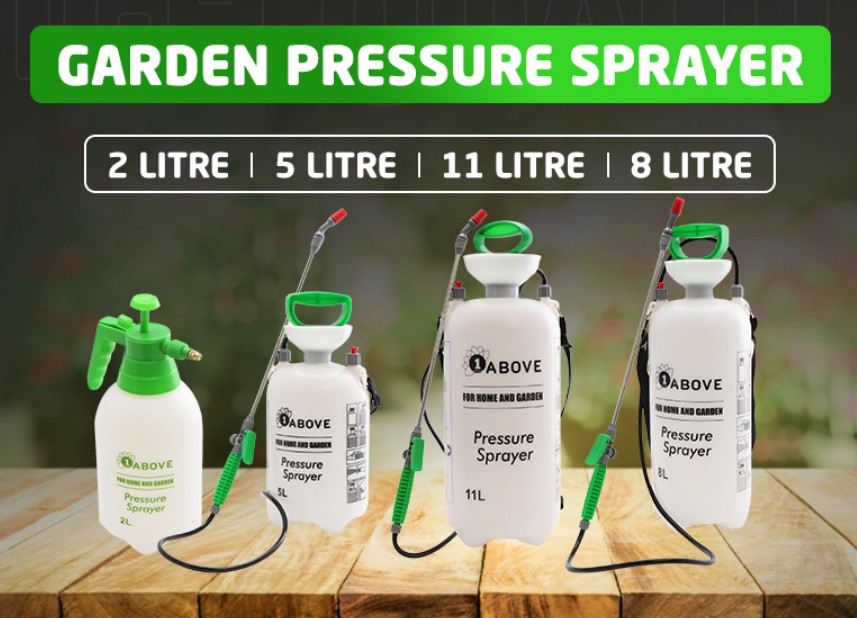
If you have been looking at 1ABOVE sprayers, you will have noticed there is not just one option. There are four main sizes, 2 litre, 5 litre, 8 litre, and 11 litre, and at first glance, they all seem fairly similar apart from capacity.
That is where things can get slightly confusing. Bigger is not always better, and smaller is not always easier. I think the right choice really depends on how often you plan to use it, what you are spraying, and how much carrying you are willing to do without grumbling halfway through the job.

A Budget Range with Similar Features
Across the range, the core features remain quite consistent. You get adjustable nozzles, pump action pressure systems, and fairly lightweight plastic builds. On paper, they all aim to handle tasks like watering, weed control, and applying treatments.
However, as we have seen in earlier reviews, performance and durability can vary. I reckon that means choosing the right size is just as important as choosing the brand itself. A well-matched sprayer may feel far more usable than simply picking the biggest tank available.
In this guide, we will walk through each option and where it may fit best, with a realistic view of what you can expect.
Buying Guide Options
Option 1 - 1ABOVE 2 Litre Pump Action Sprayer
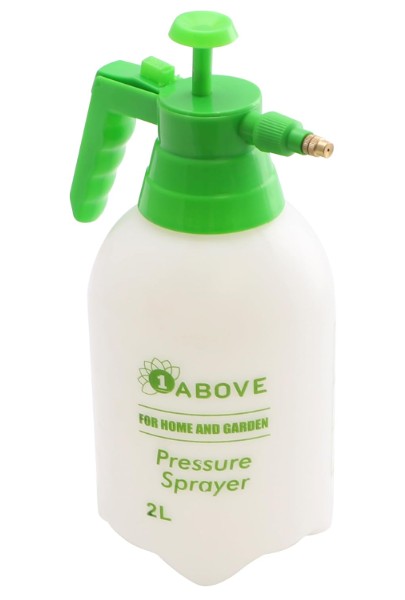
This is the smallest option in the range and, I think, the most straightforward. With a 2-litre capacity, it is designed for quick, light jobs rather than anything too demanding.
It uses the same pump action system as the larger models but in a much more compact form. The adjustable nozzle allows for both misting and direct spray, which may be useful for indoor plants, small garden areas, or spot treatments.
The main advantage here is convenience. It is lightweight, easy to carry, and unlikely to cause arm fatigue. The wide opening should help with filling, and the pressure release valve adds a bit of safety.
That said, the smaller capacity means more frequent refilling. I reckon this is best suited for quick jobs, houseplants, or very small gardens, rather than anything involving larger areas.

Option 2 - 1ABOVE 5 Litre Garden Pressure Sprayer

The 5-litre model is probably the most popular choice, and it is easy to see why. It sits right in the middle, offering a balance between capacity and usability.
It comes with the same adjustable nozzle, ergonomic handle, and pressure system, but with enough volume to handle small to medium garden tasks without constant refilling. This makes it a more practical option for things like weed control, fertilising, or general garden spraying.
I think this is the “safe choice” for most people. It is not too heavy when full, but still large enough to feel efficient. If you are unsure which size to go for, this is likely the most sensible starting point.
However, as with many budget sprayers, performance may vary slightly, so it is worth keeping expectations realistic.
Option 3 - 1ABOVE 8 Litre Garden Pressure Sprayer
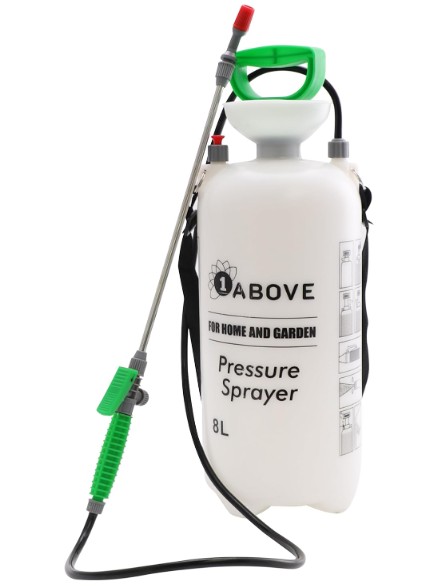
Stepping up to 8 litres, you start to move into more serious territory. This model is better suited for larger gardens or jobs that would otherwise require multiple refills.
The increased capacity reduces interruptions, which can be helpful if you are spraying larger areas like patios, lawns, or fencing. The adjustable nozzle and pressure system remain the same, so the main difference is volume and weight.
At around 1.35 kg empty, it is still manageable, but once filled, it will feel noticeably heavier. I reckon this is where comfort becomes more important, especially if you are carrying it for longer periods. This option may suit those who want fewer refills and are comfortable handling a bit more weight.
Option 4 - 1ABOVE 11 Litre Garden Pressure Sprayer

The 11-litre version is the largest in the range and clearly aimed at bigger jobs. Whether that is large gardens, repeated use, or more demanding spraying tasks, this model is designed to minimise refilling as much as possible.
With that extra capacity comes extra weight, and this is where things can become less convenient. Carrying a full 11-litre tank around the garden is not for everyone, particularly if you are working over longer periods.
Feature-wise, it remains similar to the smaller models, adjustable nozzle, pump action, and wide filling opening. The difference is purely in scale. I think this option makes sense if you regularly cover larger areas and want to reduce downtime. For occasional use, however, it may feel a bit excessive.
Practical Recommendations
Choosing between the 1ABOVE sprayer sizes is less about which one is “better” and more about which one fits your situation. I think this is where many people go wrong, they either go too big and regret carrying it, or too small and get fed up refilling it every five minutes. Let’s break it down in a more practical way.
Based on Age and Ease of Use
Lighter, easier handling (2L – 5L) - If ease of use is a priority, especially for older users or anyone who prefers lighter tools, the smaller sizes tend to make more sense.
- The 2L is very manageable, easy to lift, and simple to control
- The 5L still feels reasonable when full, without becoming a burden
I reckon the 5L is probably the upper limit for comfortable everyday use for most people without strain.
Heavier options (8L – 11L) - The 8L starts to feel noticeably heavier when full. The 11L can become quite cumbersome, especially over longer periods
These may suit stronger users or those comfortable working with heavier equipment, but they are not the easiest to carry around for extended sessions.
Based on Garden Size and Workload
Small gardens, patios, or indoor plants - Best choice 2L, Also suitable: 5L (if you want fewer refills)
For light watering, misting, or spot weed treatment, the 2L is usually enough. Anything larger may feel like overkill.
Medium gardens and general maintenance - Best choice 5L. This is where the 5L really shines. It offers enough capacity for regular jobs like weed spraying, fertilising, or cleaning patios without constant refilling. I think this is the most practical “all-rounder” for most households.
Larger gardens or longer sessions - Best choice 8L. If you are covering bigger areas, the 8L reduces interruptions. It may help if you are spraying lawns, driveways, or multiple areas in one go. That said, you will feel the extra weight, so it is a bit of a trade-off between convenience and comfort.
Very large areas or repeated heavy use - Best choice 11L. This is more suited to users who want to minimise refilling as much as possible, perhaps for larger properties or repeated tasks. I reckon for most casual gardeners, this size may feel a bit excessive unless you genuinely need the capacity.
Based on Frequency of Use
Occasional use (or once in a while) 2L or 5L is usually sufficient. If you are only bringing it out now and then, a smaller, easier-to-handle sprayer tends to be the better option. Less hassle, less weight, and easier storage.
Regular use (weekly or frequent tasks) is the 5L or 8L. For more regular gardening routines, stepping up to 5L or 8L may improve efficiency. Fewer refills can save time, especially during longer sessions.
Frequent or heavy-duty use is the 8L or 11L - If you are using it often and covering large areas, the bigger tanks may help. Just be prepared for the added weight and the fact that these are still budget sprayers, not professional-grade tools.
Based on Type of Liquids Used
Water, light fertilisers, and general plant care. All sizes suitable - These are the easiest tasks for any sprayer, and most users should not run into major issues here.
Weed killers, pesticides, and cleaning solutions - 5L or above recommended. These tasks often require more coverage, so a larger tank may help reduce refilling. Just make sure seals are tight and the sprayer is cleaned after use.
Thicker liquids (e.g. fence paint, heavy solutions) - Proceed with caution. Lots of feedback suggests these sprayers may struggle with thicker substances. I would recommend sticking to water-based or low-viscosity liquids where possible.

Final Practical Take
If you are unsure, the 5L model is the safest starting point. It balances usability, capacity, and comfort better than the others.
- Go smaller (2L) for convenience and light tasks
- Go larger (8L or 11L) only if you genuinely need the extra capacity
At the end of the day, I think it comes down to this, choose the size that makes the job easier, not the one that simply looks more capable on paper.
Related Reviews:
 1ABOVE Sprayer Reviews 2026 ⭐⭐⭐
 Best REQUISITE NEEDS Sprayer 2026 ⭐⭐⭐
 Amazon Basics Garden Sprayer Reviews ⭐⭐⭐⭐
 Ansio Garden Sprayer Pros & Cons ⚖️
 Armo Garden Sprayer Reviews 2026 ⭐⭐⭐
 Green Haven Sprayer Customer Reviews 2026 ⭐⭐⭐
 Coselena Pressure Sprayer Reviews 2026 ⭐⭐⭐
REQUISITE NEEDS Sprayer Reviews 2026 ⭐⭐⭐
Coselena Pressure Sprayer Reviews 2026 ⭐⭐⭐
REQUISITE NEEDS Sprayer Reviews 2026 ⭐⭐⭐
 Defenders Pressure Sprayer Reviews ⭐👎
 Spear & Jackson Sprayer Customer Reviews 2026 ⭐⭐⭐⭐
Recent Comments